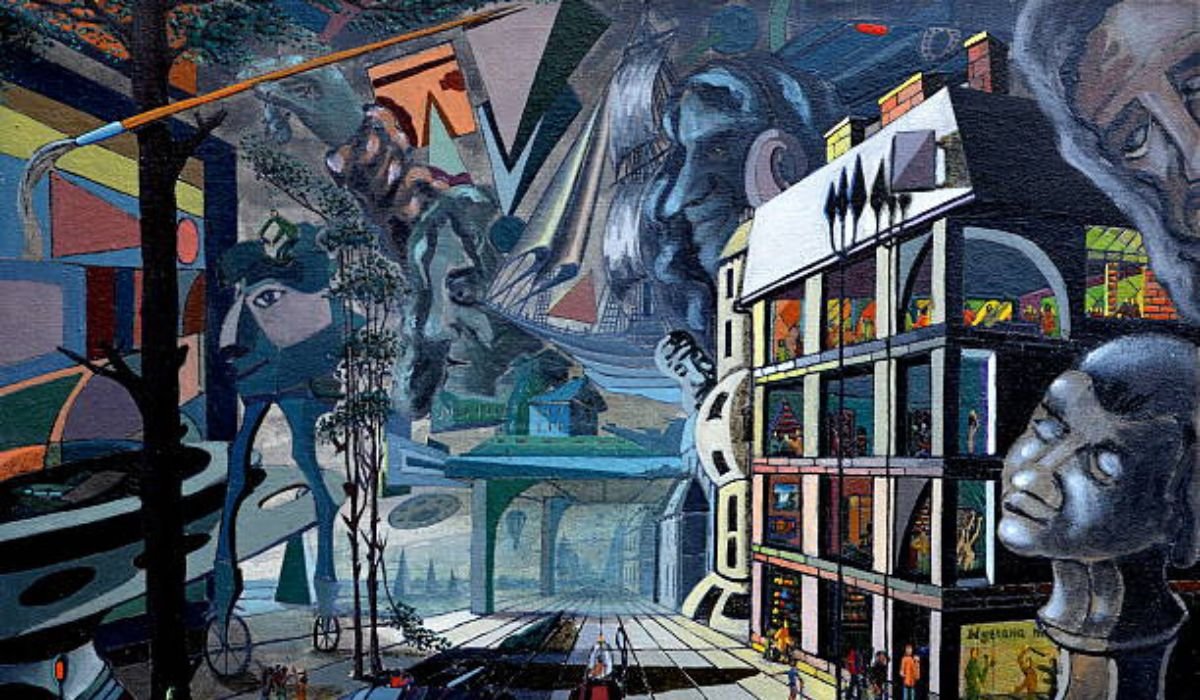
In an era where digital illusions compete with lived experience, artists are turning inward to the subconscious mind, crafting dreamscapes that challenge our grasp on the real. As we navigate 2026, this revival feels less like nostalgia and more like a necessary recalibration, where the uncanny emerges not just in canvases but in how we perceive uncertainty itself.
The Historical Echo: From 1936 to Today’s Resurgence
Surrealism first stormed London’s New Burlington Galleries in 1936, with the International Surrealist Exhibition drawing crowds to works by Salvador Dalí, René Magritte, and Max Ernst. Organized by André Breton and featuring over 390 pieces, it introduced automatism and psychoanalytic art to British audiences, blending Freudian dream analysis with visual disruption. This event, attended by thousands despite controversy, marked Surrealism’s foothold in Britain, influencing local artists like Roland Penrose and Ithell Colquhoun.
Fast forward to 2026, and the movement’s resurgence is unmistakable. The 2024 centennial of André Breton’s Manifesto ignited fresh interest, but its momentum carries forward amid global tumult—political instability, technological overload, and ecological anxiety. As curator Massimiliano Gioni notes in exhibitions like “Fata Morgana,” Surrealism’s spiritual and psychic frameworks are no longer fringe; they offer tools for meaning-making in crisis. Contemporary British Surrealism, in particular, draws on this legacy, reinterpreting the 1936 exhibition’s spirit through modern lenses like quantum painting and materiality in art.
Why now? Record-breaking auctions underscore the trend: Frida Kahlo’s “El Sueño (La Cama)” fetched $54.7 million in 2025, signaling collectors’ appetite for narrative-rich, emotionally-driven works. Surrealism’s market share nearly doubled from 2018 to 2024, per Sotheby’s reports, with female surrealists like Leonora Carrington leading the charge. In Britain, National Trust modernist homes, such as 2 Willow Road, preserve surrealist collections, bridging historical reverence with contemporary excitement.
Dreamscapes and the Uncanny: Core Techniques in Revival
Contemporary surrealist painters are embracing automatism—spontaneous mark-making that taps the subconscious—to create immersive worlds. At the London Art Fair 2026, running January 21-25, galleries like England & Co. spotlight British surrealist masters like Marion Adnams and John Banting, 90 years after the 1936 exhibition. Their works evoke the uncanny, where familiar objects morph into eerie symbols, reflecting today’s blurred boundaries between reality and simulation.
Quantum painting emerges as a semantic thread, with artists like Henry Orlik using microscopic, spiraling brushstrokes to explore physics-inspired dreamscapes. Orlik’s “excitations” technique, rediscovered after decades of isolation, merges visionary imagination with quantum themes, aligning with the UN’s 2025 Year of Quantum Science. His 2024 retrospective sold out, highlighting how materiality in art—visible textures and distortions—grounds surreal visions in tactile reality.
Psychoanalytic art persists, delving into the subconscious mind. Swedish surrealist Frank Björklund, featured at Mollbrinks Gallery during the fair, blends humor with existential reflection in meticulously rendered scenes. Similarly, Ni Xuemin’s “Dusk Awaits Dawn” at Ripple Verse Gallery suspends time in ethereal palettes, probing identity and futurity. These pieces invite viewers to confront personal mythologies, echoing Surrealism’s original Freudian roots while addressing 21st-century isolation.
READ ALSO: Climate Art: How Visual Activism Speaks Volumes in the Fight for Our Planet
Contemporary Innovators: Blending Tradition with Modernity
The resurgence of British Surrealist masters like Orlik and Colquhoun coincides with emerging voices. Sara Anstis constructs surreal landscapes with anthropomorphic flora and symbolic objects, engaging mythology and ecology. Mulgil Kim’s personal surrealism, shown at Maddox Gallery, focuses on authored visual languages that feel distinctly intimate.
Immersive surrealism exhibitions in 2026 amplify this. Baton Rouge Gallery’s Surreal Salon Soiree, curated by Swoon, features over 60 pop-surrealist artists, transforming viewers into living art. In Osaka, “Surrealism: Expanding from the Visual Arts” traces the movement’s influence on fashion and design, including automatism and collage. These events underscore how the dreamworld influences modern design, from architecture to digital realms.
Gen Z and Millennial investors, drawn to narrative-rich art, find Surrealism’s emotional depth compelling. As Saatchi Art notes, buyers prioritize works that resonate personally, even without institutional backing. Exploring the subconscious through 21st-century art offers escape and insight, making it a timely investment.
Investing in Contemporary Surrealist Art: Opportunities and Insights
For collectors and gallery owners, Surrealism’s return to the London Art Fair 2026 presents prime opportunities. With market confidence rising—surrealist pieces outperformed contemporary indices by 34% over three years—investing in contemporary surrealist art feels strategic. Emerging artists like Eunjo Lee and Anoushka Mirchandani, from the Global South, bring fresh perspectives on migration and technology.
Original insight: This revival isn’t mere repetition; it’s adaptive. Where 1936 surrealists rebelled against rationality post-World War I, today’s painters confront AI-generated realities and climate dread. The uncanny in Orlik’s quantum swirls or Kim’s mythologies isn’t escapist—it’s a mirror, revealing how fragmented psyches seek wholeness amid chaos. Yet, nuance matters: Surrealism risks commodification if divorced from its subversive core, urging collectors to prioritize authenticity over trends.
Global Perspectives: Beyond Western Horizons
Surrealism’s revival transcends Britain, embracing diverse voices. In Seoul’s Mediacity Biennale, Indigenous cosmologies intersect with surreal frameworks. Mexican surrealist Leonora Carrington’s retrospective at Musée du Luxembourg highlights hybrid identities, fleeing war to forge feminist visions. Artists like Rosana Paulino from Brazil infuse surrealism with themes of race and memory, avoiding Western-centric bias.
This inclusivity enriches the movement, acknowledging how dreamscapes vary across cultures— from African spiritualism in Nour Bishouty’s work to Asian futurism in Ni Xuemin’s. Ethical awareness demands recognizing these contributions, ensuring the revival amplifies marginalized narratives.
Reflecting on the Blur: A Forward Glance
As Surrealism blurs reality in 2026 painting, it invites us to question what lies beneath the surface. From the London Art Fair’s spotlight to global exhibitions, this resurgence educates while inspiring action—visit a gallery, invest in a piece that stirs the subconscious. In these dreamscapes, we find not just art, but a pathway to reimagine our fractured world, one uncanny vision at a time.
YOU MAY ALSO LIKE: Exploring Ancient Artz: A Journey Through the Masterpieces of Human History