

In a world where fast fashion cycles spin ever faster, there’s quiet rebellion in choosing pieces that whisper of permanence. Picture a crisp autumn morning in the English countryside, where a waxed cotton jacket, its corduroy collar softened by years of wear, drapes over a chunky cardigan. This isn’t just clothing; it’s a narrative of resilience, a nod to lives lived amid fields and factories. Barn jackets and knits, once humble guardians against the elements, now stand as emblems of timeless style, inviting us to reconsider what endures in our wardrobes and our cultures.
Roots in the Soil: The Historical Tapestry of Utility Fashion
Barn jackets trace their lineage to late 19th-century France, where the chore jacket emerged as essential garb for laborers, its loose fit and wide pockets tailored for tools and toil. By the 1890s, this practical design crossed the Atlantic, evolving into the American barn jacket amid Midwestern farms. Brands like Carhartt introduced iterations in 1917, adding signature corduroy collars for added warmth and durability, while L.L. Bean launched its Field Coat in 1924, rebranded as the Adirondack Barn Coat in 2003.
Across the pond, Barbour, founded in 1894 in South Shields, England, perfected waxed cotton outerwear for seamen facing North Sea gales. Their 1983 Beaufort Jacket, with its olive exterior, tartan lining, and spacious pockets, became synonymous with British rural life, earning royal warrants and a place in global wardrobes. Knits, meanwhile, have a parallel story of functionality: from fishermen’s cable sweaters in Aran Islands, Ireland, to merino wool cardigans that insulated shepherds in the Alps. These pieces weren’t born in ateliers but in necessity, their textures telling tales of human ingenuity against nature’s whims.
Today, this heritage aesthetic resonates amid cultural shifts toward authenticity. As we grapple with environmental fragility and social flux, barn jackets and knits offer a grounded counterpoint to disposable trends, reminding us that style can be both practical and profound.
Why Now? The Resurgence of Workwear Chic in a Transitional World
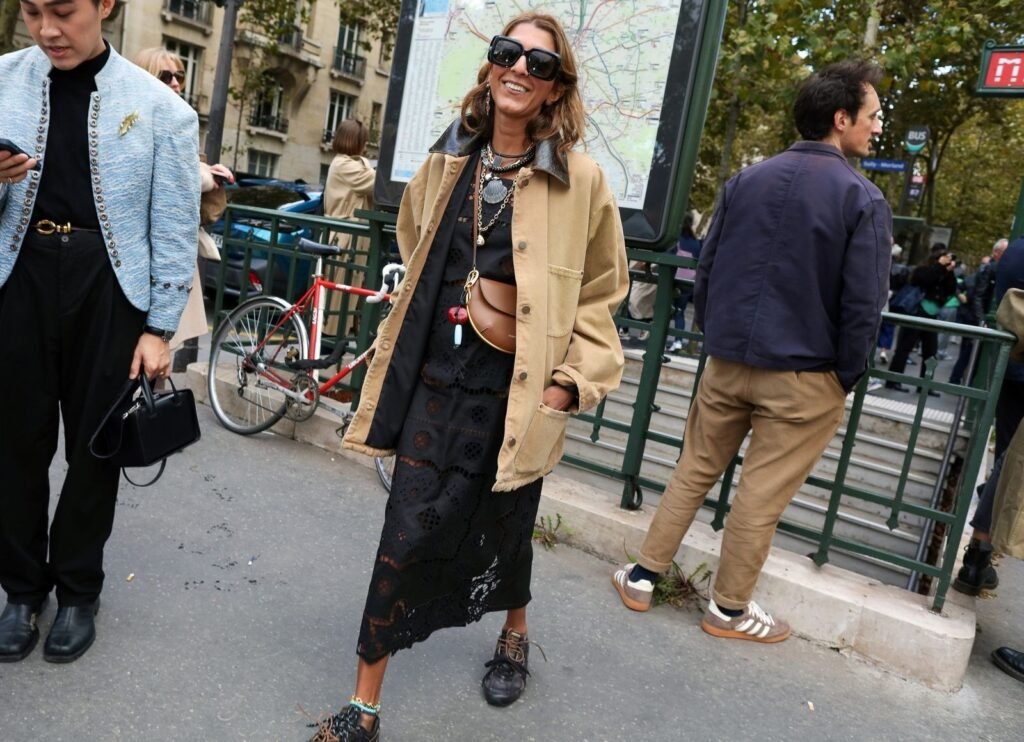
In 2025, barn jackets aren’t confined to barns; they’re striding down urban streets and runways alike. Fashion houses like Prada and Miu Miu have reimagined them with padded silhouettes and enhanced pockets, while celebrities such as Anne Hathaway and Hailey Bieber layer them over midi dresses for effortless elegance. This surge in utility fashion reflects a broader yearning for quiet luxury: pieces that prioritize longevity over logos, echoing the slow fashion movement’s call for mindful consumption.
Knits complement this perfectly, serving as layering essentials that adapt to fickle weather. Chunky cardigans in neutral tones from brands like Toteme or The Row provide warmth without bulk, their timeless appeal lying in versatile textures that shift from rustic to refined. As temperatures fluctuate globally due to climate change, these items become more than apparel; they’re adaptive tools in a wardrobe built for transition.
This workwear chic isn’t new, but its timing feels pointed. In an era of economic uncertainty and cultural reevaluation, donning a barn jacket evokes blue-collar resilience, a subtle act of solidarity with labor histories often overlooked in high fashion. Yet, it’s evolved: no longer just for manual work, it bridges class divides, appearing in art installations and street style that critique consumerism.
Styling Enduring Outerwear: Barn Jackets and Knits in Harmony
Subtlety defines the art of pairing barn jackets with knits. Start with the basics: a waxed cotton barn jacket in olive or beige, its corduroy collar framing a cream cable-knit sweater underneath. This layering essential creates depth, the knit’s autumnal textures softening the jacket’s rugged edges for a heritage aesthetic that feels lived-in yet polished.
For transitional weather, opt for oversized barn jacket outfit ideas that allow room for experimentation. Drape a chunky cardigan over a button-down, then top with a denim barn jacket for urban edge—perfect for city commutes or countryside escapes. Balance the boxy shape with tailored trousers or corduroys, adding knee-high boots for grounded sophistication.
How to layer knits under barn coats? Think contrast: a slim merino turtleneck beneath a structured jacket prevents bulk, while Fair Isle patterns inject playful heritage. For fall, classic barn jackets and knits shine in earthy palettes—mustard yellows, deep maroons—evoking autumnal textures that harmonize with changing leaves.
Sustainability elevates these choices. Seek sustainable barn jackets and knitwear from brands like Toad&Co, using organic cotton and eco-friendly dyes, or Barbour’s repair services that extend garment life. This mindful approach transforms styling into a statement, aligning fashion with ethical awareness.
Beyond the Fabric: Original Insights on Heritage Style Enduring Outerwear Trends
What makes barn jackets and knits timeless isn’t mere nostalgia; it’s their quiet defiance against obsolescence. In a digital age where identities fragment, these pieces ground us in tangible histories, fostering a heritage style that critiques fast fashion’s environmental toll. Consider how workwear chic has infiltrated artivism: designers repurpose vintage fabrics into protest pieces, symbolizing labor rights and sustainability.
Yet, nuance is key. While brands like Ralph Lauren have stylized utility fashion for luxury markets, this risks diluting its origins. True authority lies in authenticity—choosing pieces that honor craftsmanship, like hand-knitted sweaters from indigenous artisans or waxed jackets from family-run mills.
This enduring outerwear trend also challenges gender norms. Once male-dominated, barn jackets now empower diverse bodies, layered with knits in inclusive sizes, reflecting broader cultural inclusivity.
Global Threads: Diverse Perspectives on Autumnal Textures
Barn jackets and knits transcend Western roots, weaving into global narratives. In Japan, utility fashion inspires brands like Visvim, blending American workwear with traditional indigo dyeing for a hybrid aesthetic. African designers incorporate waxed cotton into contemporary ankara prints, merging heritage with activism against colonial legacies.
In Latin America, chunky cardigans echo Andean weaving traditions, where alpaca knits layer under utilitarian jackets for high-altitude resilience. This intersectionality highlights how enduring outerwear adapts to cultural contexts, promoting ethical trade and indigenous knowledge.
Avoiding bias means acknowledging privilege: while quiet luxury appeals to affluent creatives, affordable options from H&M or Mango democratize the trend, making workwear chic accessible worldwide.
YOU MAY ALSO LIKE: Reimagining the Y2K Minimalist Wardrobe: Nostalgia Meets Modern Restraint